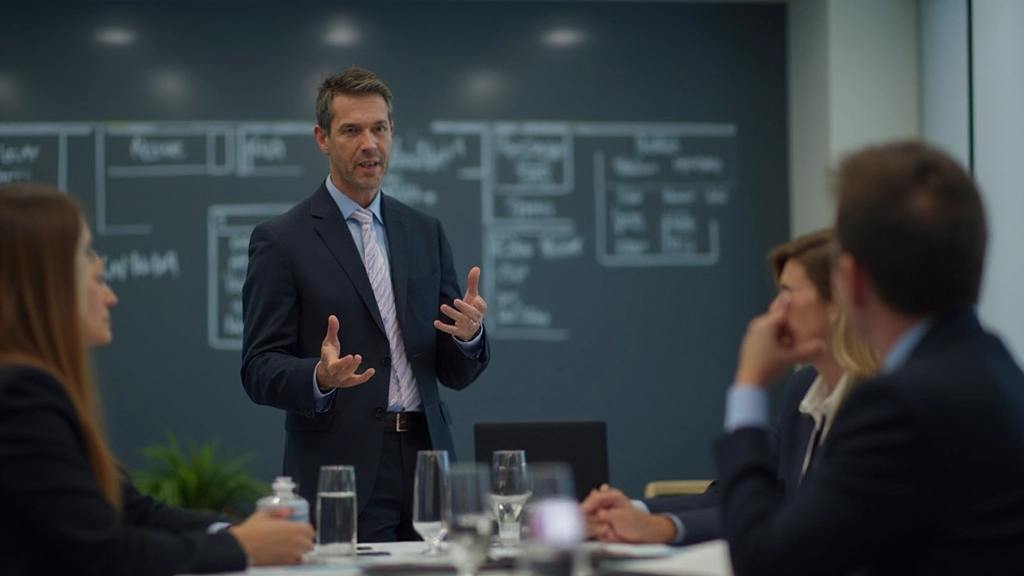
Risk Management Consulting Strategies
Master the methodologies to identify, assess, and mitigate organizational risks through proven consulting frameworks

Understanding Risk Management in Modern Organizations
Every organization faces risks—from operational disruptions to strategic uncertainties. The difference between those that thrive and those that struggle often comes down to how effectively they identify, evaluate, and respond to these challenges. Risk management consulting has evolved from a purely defensive function into a strategic advantage that shapes organizational decision-making.
The consulting approaches we explore here represent years of practical experience across diverse industries. They focus on tangible methodologies that organizations can implement to build resilience, improve stakeholder confidence, and create sustainable competitive advantages through proactive risk governance.

The Risk Identification Framework
Risk identification forms the foundation of effective consulting strategies. This process involves systematically uncovering potential threats that could impact organizational objectives across financial, operational, compliance, and reputational dimensions.
Core Identification Methodologies
- Stakeholder interviews and workshops - Direct engagement with department heads, managers, and subject matter experts to surface concerns from varied organizational perspectives
- Process mapping and analysis - Detailed examination of critical workflows to identify potential failure points and vulnerabilities
- Historical data review - Analysis of past incidents, near-misses, and performance metrics to inform current risk landscapes
- Industry benchmarking - Comparison against sector-specific risks and competitor experiences to contextualize organizational exposure
Successful consultants recognize that risk identification is not a one-time exercise. Organizations evolve, markets shift, and new threats emerge. Establishing continuous monitoring mechanisms ensures that risk registers remain current and reflective of the true operating environment.


Assessment and Prioritization Methods
Once risks are identified, organizations must assess their potential impact and likelihood. This evaluation determines which risks deserve immediate attention and resource allocation versus those requiring ongoing monitoring.
"Effective risk management is not about eliminating all risks—it's about understanding which risks matter most and responding with appropriate strategy."
— Risk Governance Expert
Assessment Approaches
Qualitative assessment uses expert judgment to categorize risks into levels like high, medium, and low. This approach is valuable when historical data is limited or when addressing emerging, unprecedented challenges. Quantitative assessment applies numerical probability and financial impact estimates, enabling sophisticated modeling and scenario analysis. Most sophisticated consulting strategies employ a hybrid approach, combining both methods to capture both measurable and judgment-based factors.
Prioritization matrices help visualize which risks require immediate mitigation versus those suitable for monitoring. Organizations typically focus resources on high-impact, high-probability risks first, then address medium-risk categories according to strategic priorities and available capacity.
Mitigation and Response Planning
Risk response represents where consulting value translates into concrete organizational action. Four primary response strategies guide how organizations address identified risks: avoid, mitigate, transfer, or accept.
Response Strategy Framework
Avoid
Eliminate activities or conditions that create the risk. This involves changing business strategy, withdrawing from certain markets, or restructuring operations to sidestep exposure entirely.
Mitigate
Reduce the probability or impact of risk through preventive controls, enhanced procedures, training programs, and process improvements that strengthen organizational resilience.
Transfer
Shift risk to third parties through insurance, outsourcing, contracts, or partnerships. This approach transfers financial or operational responsibility while maintaining organizational oversight.
Accept
Consciously accept certain risks when mitigation costs exceed potential impact or when risks are integral to strategic objectives. Requires documented decision-making and contingency planning.
Effective response planning creates accountability structures, assigns ownership, establishes timelines, and allocates resources. Consultants help organizations document these decisions and communicate them across relevant departments to ensure coordinated implementation.


Monitoring, Reporting, and Continuous Improvement
Risk management is not static. Organizations must continuously monitor the effectiveness of their controls, track emerging risks, and adjust strategies as circumstances change. Consulting frameworks establish governance structures, reporting cadences, and improvement mechanisms to keep risk management aligned with organizational evolution.
Establishing Effective Oversight
Key Risk Indicators (KRIs) provide early warning signals that risk levels are changing. Rather than waiting for problems to materialize, organizations track metrics like regulatory compliance rates, incident frequencies, or customer satisfaction trends. When KRIs shift, this triggers deeper investigation and potential response adjustments.
Control effectiveness testing validates that implemented mitigation measures actually work as intended. Regular audits, process reviews, and operational testing ensure that controls remain robust and adapted to current conditions. Board and executive reporting maintains organizational leadership's awareness of risk status, emerging issues, and control performance through standardized reporting formats.
Successful consulting engagements establish feedback loops where lessons learned from risk events or near-misses inform continuous process improvements. This creates organizational learning cultures where risk awareness becomes embedded in decision-making rather than treated as a separate compliance function.
Building Organizational Resilience Through Systematic Risk Consulting
Risk management consulting transforms uncertainty into structured organizational advantage. By implementing comprehensive identification, assessment, response, and monitoring frameworks, organizations develop the clarity and capabilities to navigate complex business environments with greater confidence.
The methodologies discussed—from stakeholder-driven identification through continuous monitoring—represent proven approaches that have helped organizations across industries strengthen decision-making, improve operational efficiency, and build stakeholder trust. Effective risk consulting is not about perfect risk elimination; it's about creating organizational competence to understand, respond to, and learn from risks in ways that support strategic objectives.
Strengthen Your Organization's Risk Capabilities
Explore structured approaches to risk governance and implementation frameworks that organizations use to build resilience.
Explore PM Consulting ResourcesDisclaimer
This article provides educational information about risk management consulting methodologies and frameworks. The strategies and approaches described represent general best practices used across organizations. Specific risk management requirements, regulatory obligations, and appropriate responses vary significantly based on industry, organization size, jurisdiction, and unique operational contexts. Organizations should consult with qualified risk management professionals, legal advisors, and industry specialists to develop risk strategies appropriate for their particular circumstances. The content herein is not a substitute for professional risk consulting, legal advice, or regulatory guidance. Implementation of any risk management framework should be adapted to your organization's specific needs and requirements.